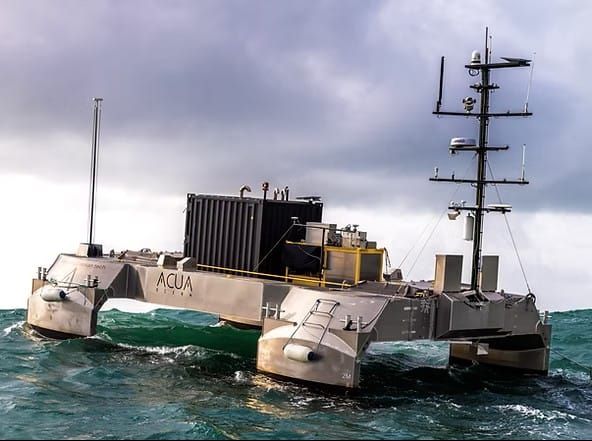
Babcock has signed an agreement with missile maker Frankenburg Technologies and uncrewed vessel builder ACUA Ocean Technologies to build a ship-based counter-drone system.
The MOU, signed on day two of the Farnborough International Airshow, is intended to explore a containerized naval launcher for Frankenburg's missile. Babcock says the launcher is designed to be fitted onto both crewed and uncrewed surface vessels and built and scaled quickly.
It builds on a January agreement between Babcock and Estonia-based Frankenburg — which specializes in low-cost missiles for drone interception — to develop new air defense systems to counter the rise in one-way attack drones. In that announcement, Babcock described the goal as developing "a cost-effective, containerised platform for launching Frankenburg's new low-cost missiles." Whether that platform has been built in the six months since hasn't been disclosed by either company.
ACUA, based in Plymouth, builds the Pioneer-class uncrewed surface vessel that can carry the missile system to sea. The company says its Pioneer USV operated continuously 16–20 nautical miles offshore in June, completing more than 100 hours at sea without hands-on intervention. The pitch is that the hull, previously known for ocean-monitoring applications, remains stable in rough seas where other platforms are forced out of action.
Babcock frames the tie-up as underpinning the UK's push toward a "hybrid navy," combining crewed and autonomous vessels, and says it is developing the technology and capability to support that shift.
Missiles vs. lasers
The deal lands alongside a broader wave of recent counter-drone investment. NATO allies agreed earlier this month to spend more than $40 billion over five years on counter-drone defenses and drone procurement, and the UK's Defence Industrial Plan has committed £490 million to directed-energy weapons—including QinetiQ's newly rebranded Helena laser system—as a separate approach to the same problem: countering drone swarms cost-effectively.
Whether this MOU converts into a funded programme, and whether the containerised launcher exists yet, are open questions neither company has answered.