
Are you a British firm that builds electronic warfare systems with a C-UAS flavour? Want to field-test your kit in Ukraine and start jamming any Russian drones that aren’t spooling a long thread of fibre optic cable behind them – maybe even interfere with those too?
The clock is ticking: There’s just under a fortnight left to get expressions of interest (EOIs) to the Ministry of Defence (MOD)’s Taskforce Kindred (TFK) – which is procuring British C-UAS EW systems to support the Armed Forces of Ukraine (AFU).
MOD has set an August 10 deadline for those interested in providing “continued and resilient EW capability” to AFU under its Operation Scorpius – an initiative formed in February 2022 that coordinates MoD teams in support of Ukraine. This project is being run by TFK, which works with DE&S to manage Ukrainian requests, it said.
The taskforce says it wants to “understand the current EW marketplace in the UK to provide continued and resilient EW capability to the AFU,” it said in a market notice.
It wants to concentrate on four system configurations.
- EWBR1-a: Soldier-Portable / Worn
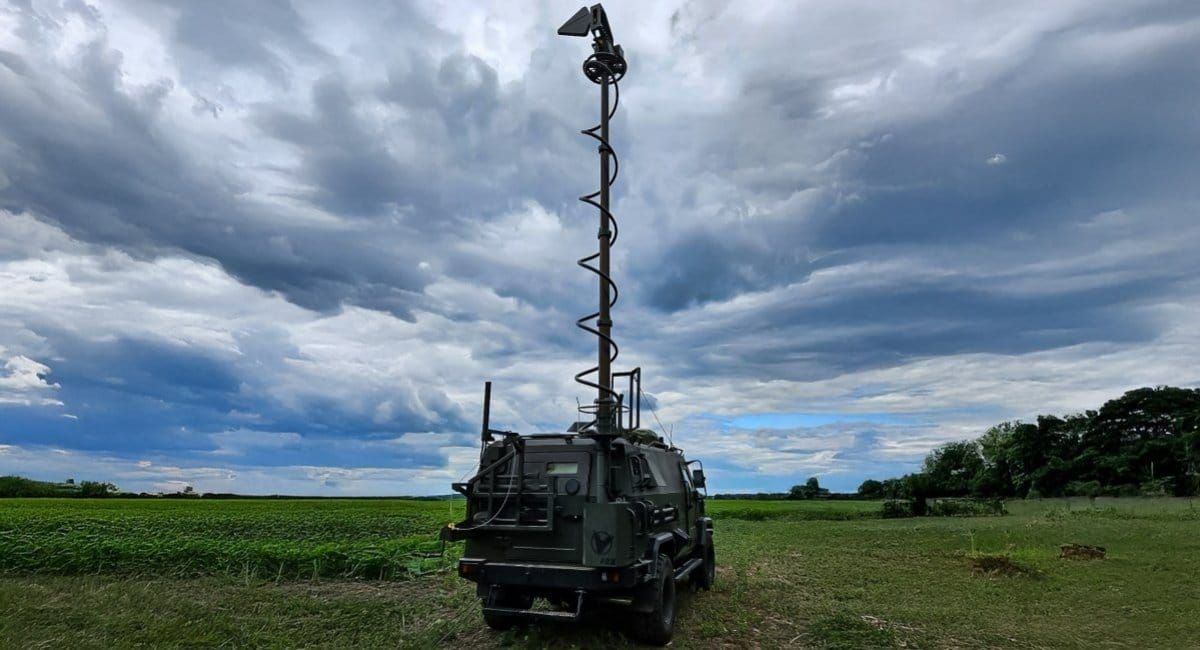
- EWBR1-b: Vehicle Hosted
- EWBR1-c: UxV-Hosted
- EWBR1-d: Emplaced.
The National Armaments Director (NAD) group’s 13-page document for those wanting to participate sets clear deadlines– and expects to offer contracts by September 8. (The Ack could not immediately confirm precise budget range/planned procurement scale.)
It also sets clear expectations. Ideally TSK wants kit that weighs less than 20kg, is capable of disrupting the electronic communications of UAS at a distance of at least
2km, can receive and record raw in-phase and quadrature (I/Q) data streams “at the full instantaneous bandwidth of the received signal, including complex modulation schemes such as frequency-hopping spread spectrum (FHSS) with a hop rate of 20,000 hops per second or higher, and can support “manual event-triggered recording via hardware or software interfaces to synchronise recording with mission-critical activities.”
MOD said that prospective providers will, among other minimum requirements, need to list all system dependencies required for deployment, and maintenance; map out in-service support options; explain how capabilities are sustained in theatre including spares packs, say where their kit is made and located and what it will cost.
Organisations concerned that their kit will get reverse engineered at scale by a prolific and highly innovative burgeoning Ukrainian defence technology ecosystem, will presumably need to take their own precautions and assess the risk of that versus getting sustained field-testing in theatre by people who could really use the help right now.
Interested parties should email DES-GBADWL-Comrcl-SharedMailbox at mod.gov.uk